Business event photography guide: 5 steps to impact
TL;DR:
Effective corporate event photography requires careful planning, venue scouting, and flexible shot lists.
Authentic candids and staged shots together create a compelling, usable gallery tailored to business needs.
Post-event editing involves ruthless culling, consistent editing, and organized delivery of high-quality images.
You invested months planning your corporate event. The speakers were sharp, the branding was on point, and the energy in the room was real. Then the photos came back flat, blurry, and impossible to use. It happens more often than it should, and it costs companies real marketing value. Strong business event photography is not about luck or expensive gear. It is about strategy, preparation, and knowing exactly what you need before anyone walks through the door. This guide walks you through every stage of the process so your next event produces images you can actually use across recruiting, marketing, and leadership communications.
Table of Contents
Key Takeaways
Point | Details |
Plan with purpose | A strategic shot list and pre-event consultation ensure every image delivers value for your organization. |
Capture authentic moments | Photojournalistic coverage and candid storytelling make your business event photos engaging and trustworthy. |
Quality beats quantity | Deliver a curated set of high-impact images instead of overwhelming clients with thousands of files. |
Fast, consistent delivery | Efficient culling and consistent editing mean you’ll have polished results ready promptly after your event. |
Understanding the essentials of business event photography
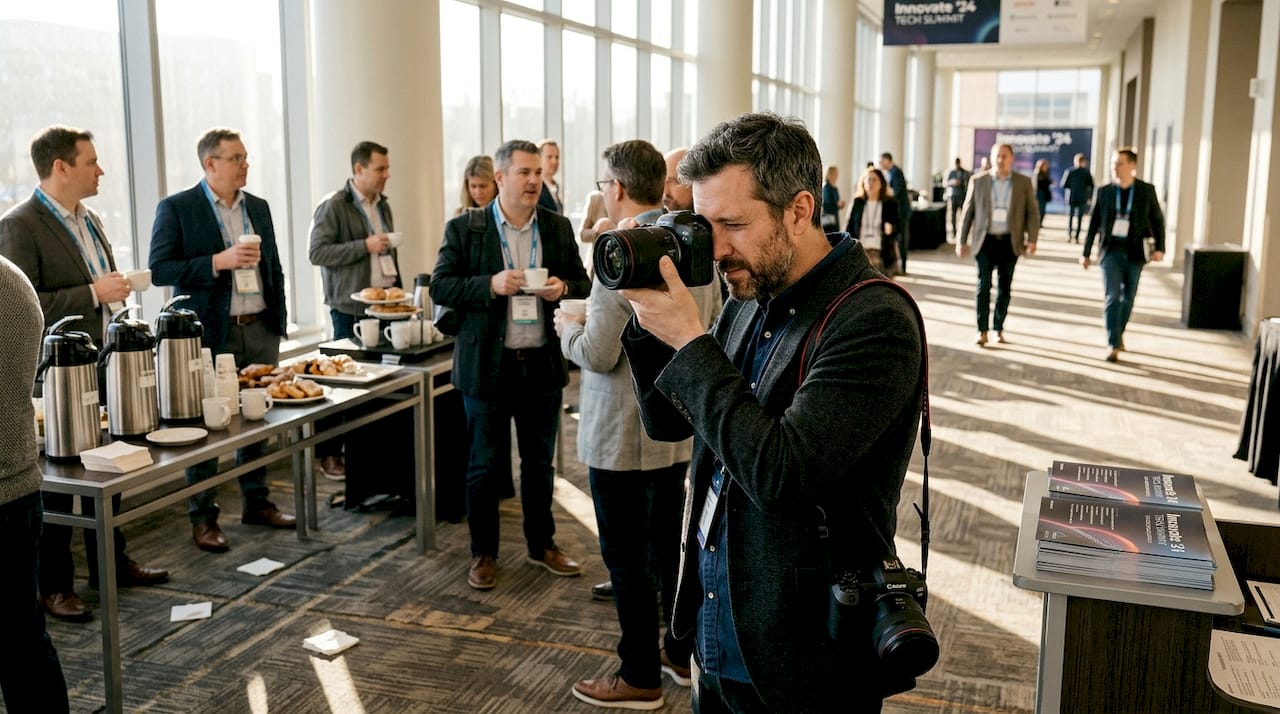
Business event photography covers a wide range of corporate gatherings: conferences, product launches, team summits, galas, trade shows, and networking events. The goal is not just to document what happened. It is to produce images that serve specific business functions long after the event ends.
Think about where these photos actually go. They end up on LinkedIn posts, press releases, annual reports, recruiting pages, and internal communications. Each of those destinations has different needs. A recruiting page wants energy and faces. A press release wants clean, professional keynote shots. A leadership update wants candid moments that feel real. That is why corporate photography essentials start with understanding the end use before you pick up a camera.
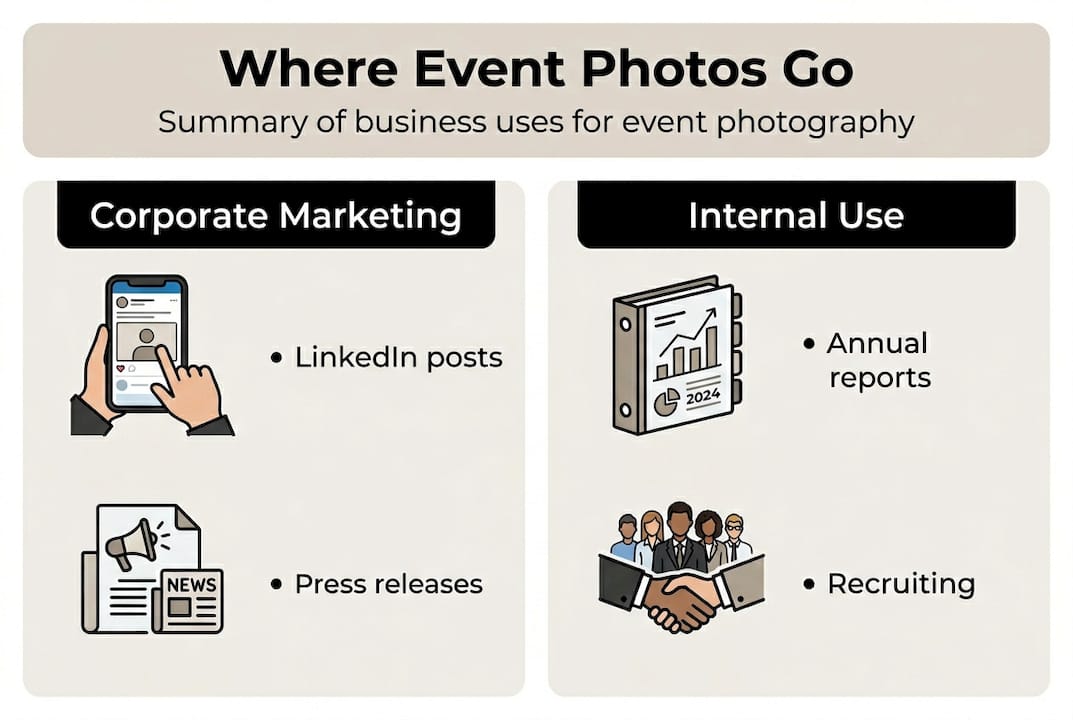
The corporate event photography guide outlines that core mechanics include creating a detailed shot list organized by usage such as recruiting, marketing, and leadership, combined with pre-event planning, venue scouting, and on-site coverage that blends candids, posed shots, branding details, speakers, and audience reactions.
Here is a quick breakdown of the main shot categories and their primary business use:
Shot category | Primary business use |
Keynote and speaker shots | PR, media, leadership content |
Audience and crowd reactions | Recruiting, social media |
Networking candids | Culture, brand storytelling |
Branding and signage details | Marketing, sponsor deliverables |
VIP and executive portraits | Internal comms, annual reports |
Venue and setup | Event recaps, future promotion |
Both candid and posed shots matter. Candids capture energy and authenticity. Posed shots give you clean, usable images for formal contexts. The best event galleries include both, balanced around your specific goals. Professional business portraits and documentary-style candids work together to tell a complete story. Following conference photography best practices means treating every moment as a potential asset, not just the obvious highlight reel.
Key shot types every event gallery needs:
Pre-event setup and registration
Wide, medium, and tight speaker coverage
Audience engagement and reaction shots
Branded elements and sponsor signage
VIP interactions and executive moments
Networking and informal conversations
Pre-event planning: your blueprint for success
The difference between a good event gallery and a forgettable one is almost always decided before the event starts. Pre-event planning is where you build the foundation for everything that follows.
Start with a real consultation. Not a quick email exchange, but an actual conversation about what the event needs to accomplish. Who are the VIPs? What does your brand look like and how should it appear in photos? Are there moments that are non-negotiable? Understanding business outcomes upfront shapes every decision on the day. Event photo planning tips consistently point to this consultation as the single highest-value step in the entire process.
Next, walk the venue. Lighting is the biggest variable in event photography, and you cannot manage it if you have not seen it. Check for mixed light sources, dark corners, bright windows, and stage lighting that shifts color. Note where the registration desk sits, where speakers will stand, and where branding is displayed. A venue walkthrough turns surprises into known quantities.
Here is a comparison of two common planning approaches:
Approach | Rigid planning | Adaptive planning |
Shot list | Fixed, no room for change | Prioritized with flexibility |
Day-of changes | Causes missed shots | Handled smoothly |
VIP coverage | May miss unscheduled moments | Captured as they happen |
Overall result | Gaps in the gallery | Complete, usable coverage |
Adaptive planning wins every time. Pre-event consultation on goals and VIPs, combined with venue scouting for lighting, is what separates impactful images from average ones. Reviewing event photography trends also helps you understand what modern corporate audiences respond to visually.
Steps to build a strong pre-event plan:
Schedule a consultation to define business goals and key outcomes
Identify VIPs, speakers, and must-capture moments
Walk the venue and assess lighting, layout, and logistics
Build a prioritized shot list organized by usage
Confirm a communication protocol for day-of schedule changes
Pro Tip: Set up a single point of contact at the event who can alert the photographer to schedule changes in real time. A quick text about a moved keynote or an unplanned VIP arrival can save a critical shot.
When choosing an event photographer, ask directly how they handle last-minute changes. Their answer tells you a lot about how prepared they actually are.
Capturing the event: execution techniques for powerful imagery
Planning sets the stage. Execution is where great photography actually happens.
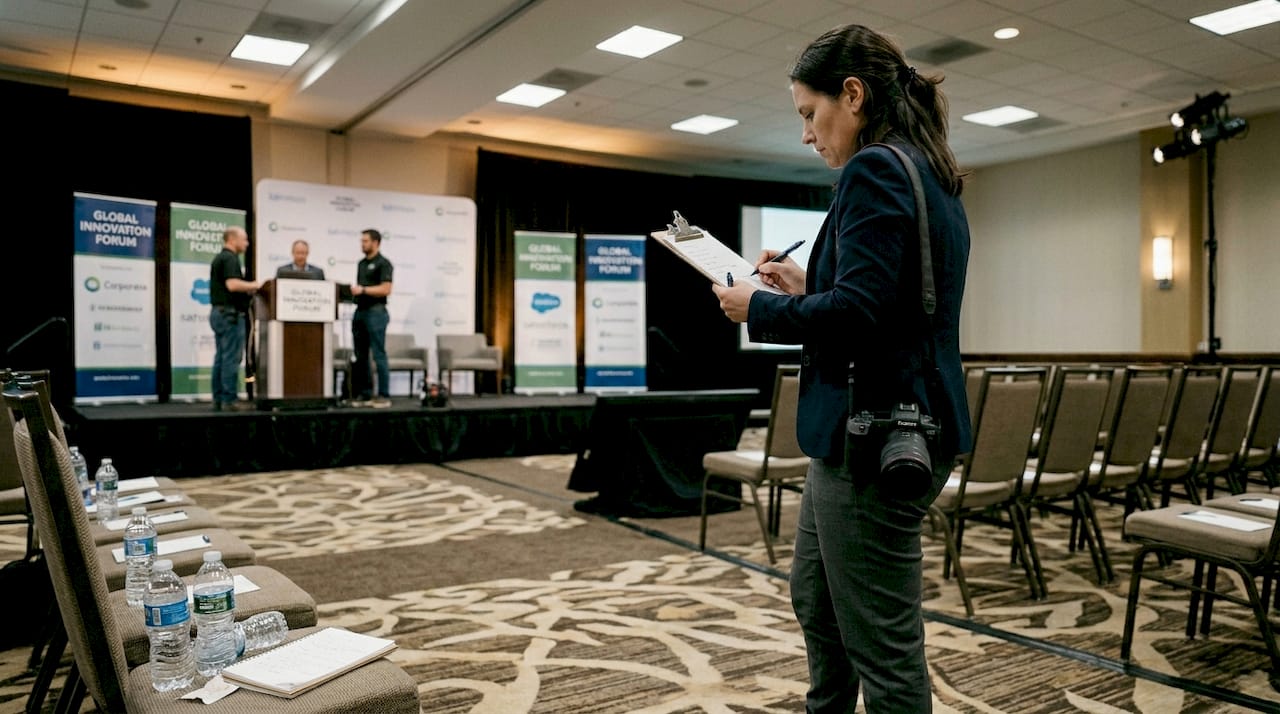
The most effective approach to business event coverage is photojournalistic. That means treating the event like a story unfolding in real time, not a series of posed setups. You follow the energy, anticipate moments, and capture sequences that show what actually happened. Staged shots have their place, but the images that get used most are almost always the ones that feel real.
Technically, corporate events are challenging. Lighting is often mixed, stages are bright while rooms are dark, and flash can disrupt the atmosphere. The solution is technical mastery in mixed lighting: shooting RAW files for editing flexibility, using high ISO settings between 800 and 1600 to handle low light, and using flash with diffusers when needed to avoid harsh shadows. These are not optional extras. They are the baseline for getting clean, usable images in real event conditions.
Blending in matters more than most clients realize. A photographer who moves quietly, avoids blocking sightlines, and does not interrupt conversations gets far better candids than one who announces their presence. The goal is to be invisible while being everywhere.
Must-have shots for every corporate event:
Wide establishing shots of the full room
Medium and tight speaker coverage from multiple angles
Audience reactions and engagement moments
Branded signage and sponsor details
Executive and VIP interactions
Registration, arrivals, and informal networking
A useful business photoshoot workflow includes identifying your five to ten non-negotiable shots before the event and treating everything else as a bonus.
Pro Tip: Follow the five-to-ten non-negotiable shots rule. Write them down, share them with your photographer, and confirm each one is captured before the event ends. Everything else is bonus coverage.
Professional photographers typically capture 800 to 2000 frames per full event day and deliver between 200 and 600 edited images. That ratio is intentional. Volume during shooting gives you options. Discipline in editing gives you quality.
Post-event workflow: from culling to delivery
When the event ends, the real editing work begins. A strong post-event workflow is what turns a hard drive full of raw files into a polished, business-ready gallery.
Culling comes first. This is the process of reviewing every image and selecting only the strongest frames. It sounds simple, but it requires discipline. The temptation is to keep too many images. The right instinct is to cut ruthlessly and keep only what is genuinely usable. Professional post-production means delivering fewer, better images rather than a massive dump of mediocre ones.
Editing for consistency is the next priority. Color grading, exposure correction, and cropping should follow a consistent standard across the entire gallery. When images look like they belong together, the collection feels professional and on-brand. This matters especially when photos will be used across multiple platforms.
Steps for an efficient post-event workflow:
Import and back up all raw files immediately
Do a first-pass cull to remove technical failures (blur, exposure errors)
Do a second-pass cull to select the strongest images by category
Edit for consistent color, exposure, and crop across the gallery
Organize final images by usage category before delivery
Deliver highlights quickly, full gallery within the agreed timeline
Organizing images by usage category before delivery saves your team significant time. Separate folders for social media, press, recruiting, and internal use mean the right person gets the right image without digging through everything.
“Quality over quantity pays off for everyone. Nobody wants to sort through 2,000 images to find the ten they actually need.”
The numbers back this up. Professional photographers shoot 800 to 2000 raw frames per day and deliver 200 to 600 edited images, averaging 30 to 50 high-quality images per hour of coverage. That discipline in delivery is a feature, not a limitation.
Why authentic storytelling matters more than staged perfection
Here is something that does not get said enough: the most polished event gallery is not always the most useful one.
Many corporate clients default to requesting lots of staged group shots and formal portraits. Those images have a place. But when an entire gallery leans on staged setups, it starts to look generic. Every company has a group photo in front of a step-and-repeat banner. Not every company has images that show real conversation, genuine laughter, and people actually engaged with the content.
Candid, narrative-driven images are what build trust with audiences. They show that your event was worth attending, that your people are engaged, and that your brand has real energy behind it. That is the kind of visual evidence that supports recruiting and stakeholder communication in ways that posed shots simply cannot.
Ruthless culling reinforces this. A tight gallery of 250 strong images tells a better story than 800 average ones. Calgary companies that invest in corporate photographer expertise understand that the final deliverable is not a volume of files. It is a curated set of images that make the company look exactly as good as it actually is.
Get impactful business event photography in Calgary
If this guide has shown you anything, it is that great event photography starts long before the event and continues well after it ends. The planning, the execution, and the editing all matter equally.
At Jeff B Photography, we work with Calgary businesses to plan, shoot, and deliver event galleries that are actually useful. From pre-event consultations to next-day highlight images, the process is built around your business goals. Whether you need full event coverage or want to add professional headshots for your team on the same day, we make it easy and efficient. Explore our work and book a consultation at Jeff B Photography to get started on your next event.
Frequently asked questions
How many photos do I get after a typical business event shoot?
Professional photographers shoot 800 to 2000 images per full event day and deliver 200 to 600 edited, high-quality photos. The exact number depends on event length and coverage scope.
What shots are must-haves for a corporate event gallery?
Key shots include speakers, audience reactions, networking candids, VIPs, branding details, and venue highlights. A detailed shot list organized by usage ensures nothing critical gets missed.
How soon can we get edited business event photos?
Turnaround is typically 3 to 5 business days for highlight images, with full galleries delivered within one week. Fast post-production and efficient culling make quick delivery possible without sacrificing quality.
Why do Calgary businesses need professional event photography?
Professional photos support brand image, recruiting, marketing, and stakeholder engagement. A detailed shot list organized by usage ensures your images serve every business function they need to.
Recommended
Comments