How photography shapes your online reputation

TL;DR:
Your online reputation starts with a professional photo, shaping trust and credibility within milliseconds. High-quality, authentic images convey competence, approachability, and consistency, influencing perceptions across all platforms. Regular updates and tailored visuals for each channel strengthen your overall online presence and reputation.
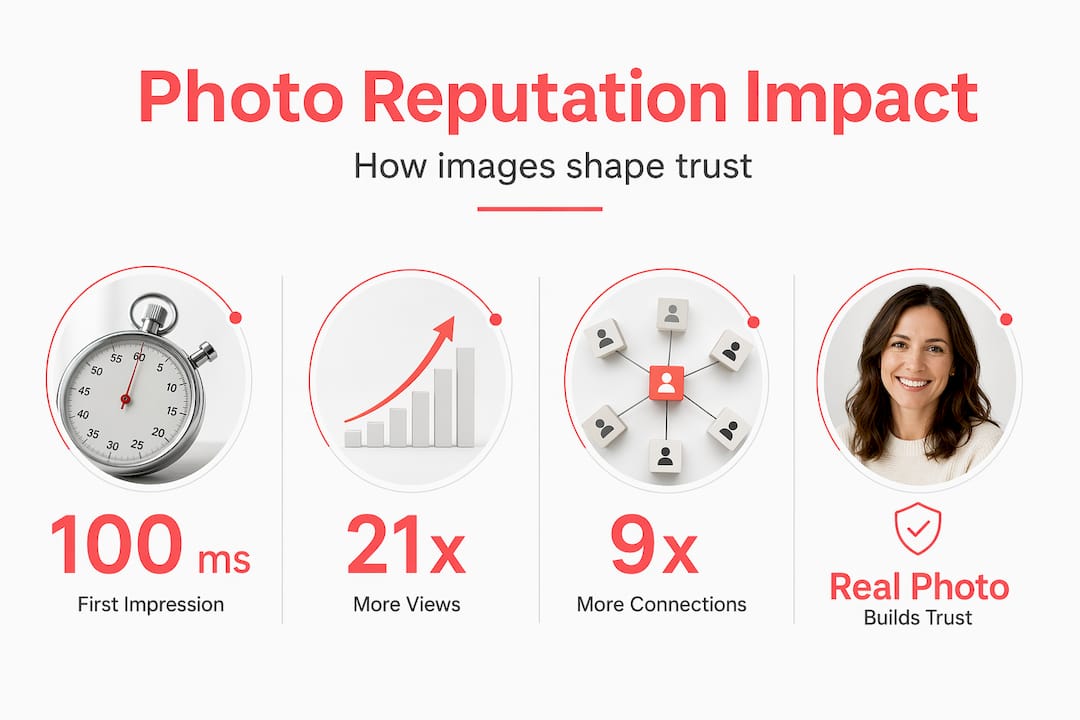
Your online reputation starts before anyone reads a single word about you. First impressions form in roughly 100 milliseconds when someone sees your photo, which means the role of photography in online reputation is not a nice-to-have. It is the opening act of every professional relationship you build online. For Calgary professionals and business owners, this matters enormously. Whether someone finds you on LinkedIn, your website, or Google, your photo is doing the talking before you get the chance.
Table of Contents
Key Takeaways
Point | Details |
First impressions form instantly | Viewers decide if they trust you in about 100 milliseconds based on your photo quality. |
Professional photos boost visibility | LinkedIn profiles with photos get up to 21 times more views and numerous additional opportunities. |
Authenticity is critical | Overly staged or AI-generated images can undermine trust and harm your reputation. |
Tailor images to platforms | Adjust cropping and resolution to suit each platform’s display requirements for maximum impact. |
Consistent updates matter | Regularly refreshed photos enhance perceived engagement and strengthen your online presence. |
How photos shape trust and professionalism online
People are wired to read faces fast. It is not a conscious decision. Your brain processes a portrait and assigns trust, competence, and warmth almost instantly. That snap judgement then colours everything else the viewer reads about you.
This is why photo quality signals so much more than aesthetics. A blurry, poorly lit, or obviously cropped-from-a-group-shot photo does not just look unprofessional. It quietly signals that you do not take your own presence seriously. And if you do not, why should a potential client or employer?
“A great photo does not shout. It simply removes doubt.”
High-quality images on your business profiles do real, measurable work. Photos on Google Business Profiles improve perceived professionalism, trust, and user engagement by visually communicating your services. That is not a small thing. In a city like Calgary, where professionals across energy, finance, tech, and real estate are all competing for the same attention, the visual content for reputation management you choose can be the difference between a click and a scroll-past.
Here is what strong photography communicates at a glance:
Competence: Clean composition, good lighting, and appropriate attire signal that you operate at a high level.
Approachability: A genuine expression and warm eye contact invite connection rather than distance.
Consistency: Matching imagery across your platforms tells a coherent brand story.
Authenticity: Real photos of real people build the kind of trust that stock images never can.
The impact of images on reputation is not just about looking polished. It is about giving people a reason to keep reading. When your photo earns that trust in the first glance, your website and every other piece of content you have created gets a fair hearing. Without it, even the best copy faces an uphill battle. Pairing strong visuals with solid Google Business Profile strategies gives your entire online presence a much stronger foundation.
LinkedIn photos and personal branding impact
LinkedIn is where photography and personal branding collide most visibly for professionals. Your profile photo is the first thing a recruiter, potential client, or collaborator sees. And the data on this is genuinely striking.
Profiles with professional photos receive 21 times more views, 9 times more connection requests, and 36 times more messages on LinkedIn. That is not a marginal improvement. That is the difference between a profile that works for you and one that sits quietly in the background.
So what actually makes a LinkedIn photo effective? Here is what moves the needle:
Genuine eye contact with the camera. It creates the feeling of a direct conversation, even in a static image.
A natural, relaxed smile. Not a forced grin. People can read the difference immediately.
A clean, uncluttered background. It keeps the focus on you, not the chaos behind you.
Appropriate attire for your industry. A Calgary oil and gas executive and a creative director have different professional contexts, and your photo should reflect yours.
High resolution, ideally 400x400 pixels or larger. Most LinkedIn views happen on mobile, and a pixelated photo loses impact fast.
Statistic callout: Profiles with professional photos get 36 times more messages on LinkedIn. That is not a visibility boost. That is a conversation starter.
Understanding how professional headshots shape your corporate identity goes beyond LinkedIn. The same photo you use there often ends up on your company website, your email signature, and your marketing materials. Getting it right once pays dividends across every touchpoint. A well-executed branding photos guide can help you think about the full picture before your session.
Pro Tip: Upload your LinkedIn photo at the highest resolution the platform accepts. Even if it looks fine on desktop, mobile compression will reveal quality issues in a lower-resolution image.
Common pitfalls and authenticity risks in online photography
Understanding the positive impact of strong photos is only half the story. The other half is knowing what quietly undermines your online reputation through photography, often without you realising it.
The most common mistake is reusing the same image across every platform without considering how each one frames it. A square crop works on LinkedIn. A wide banner crop works on a website header. The same photo used without adjustment can look awkward, off-centre, or oddly cropped, which signals carelessness rather than consistency.
Over-editing is another reputation risk that many professionals underestimate. Heavy retouching, dramatic filters, or lighting that does not match your real appearance can create a jarring disconnect when someone meets you in person or joins a video call. That gap erodes trust faster than a mediocre photo would have.
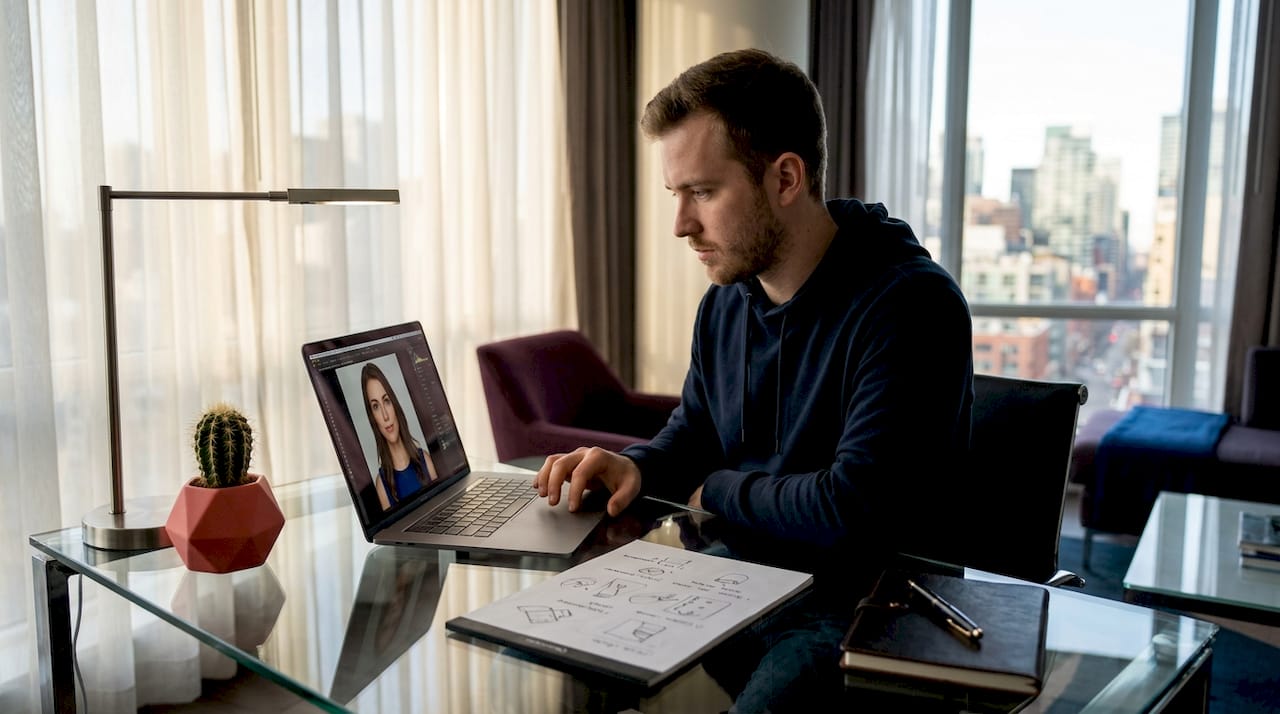
Then there is the growing issue of AI-generated imagery. Artificial images, including AI-generated visuals, cause audience scepticism and can undermine trust even when labelled as AI. Audiences are increasingly attuned to what feels real and what does not. Using an AI-generated headshot to represent yourself professionally is a gamble with your credibility, and it is rarely worth it.
Here is a practical checklist for avoiding common photo pitfalls:
Does the photo look like you do right now, not three years ago?
Does it hold up under close scrutiny on a small mobile screen?
Is the background appropriate for the platform and audience?
Have you avoided heavy filters or editing that alter your actual appearance?
Is the image resolution high enough to avoid pixelation?
The importance of real photos of a person cannot be overstated when it comes to building genuine connection. And if you want to think more broadly about how your visual identity holds together, a solid photo branding guide is a great place to start. For businesses managing multiple touchpoints, this online reputation guide offers useful context on the broader picture.
Applying photography to strengthen your online reputation
Now for the practical side. Knowing that photos matter is one thing. Building a system that keeps your visual presence strong across every platform is another. Here is how to approach it.
Step-by-step approach for Calgary professionals:
Start with a professional headshot. This is your foundation. Good lighting, a natural expression, clean background, and attire that fits your industry. Everything else builds from here.
Tailor the crop and format for each platform. LinkedIn, your website, Google Business Profile, and marketing materials each have different visual contexts. Adapt accordingly.
Maintain visual consistency. Your colour palette, background style, and overall look should feel cohesive across platforms. This is how building reputation with images actually works over time.
Update your photos regularly. Stale images signal a stale business. Regularly updating your photo gallery shows active engagement and positively influences customer perception and search rankings.
Invest in branding photography beyond headshots. Behind-the-scenes images, team photos, and workspace shots add depth to your story and give audiences more reasons to connect with you.
Here is a quick comparison of photo priorities across common platforms:
Platform | Key photo type | Priority focus |
Professional headshot | Trust, approachability | |
Website | Headshot + branding images | Credibility, brand story |
Google Business Profile | Team + location photos | Engagement, local trust |
Marketing materials | Branding + lifestyle photos | Recognition, consistency |
Pro Tip: Book your headshot and branding photos in the same session when possible. Consistent lighting and styling across both creates a visual thread that makes your entire online presence feel intentional.
Exploring the connection between branding and photography in depth will help you see how each image choice contributes to a larger narrative. And if you are specifically looking at how to position yourself in the Calgary market, branding photography for Calgary professionals is worth a read.
Why traditional views on online photos may hold you back
Here is something worth saying plainly: the idea that any decent photo will do is one of the most expensive assumptions a professional can make.
I have seen it countless times. Someone invests in a beautiful website, thoughtful copy, and a well-crafted LinkedIn profile, and then uses a photo taken at a family dinner three years ago. The rest of the work does not matter as much as they think it does, because first impressions from photos create “sticky” biases that are genuinely hard to reverse, even when the rest of your content is strong.
That stickiness is the part most people do not account for. We assume that if our content is good enough, it will correct a weak first impression. But the research does not support that. The photo sets a frame, and everything else gets interpreted through it.
The second assumption worth challenging is that professional photos are primarily about looking good. They are not. They are about looking credible. There is a real difference. A photo that has been over-retouched or artificially generated might look polished, but it can trigger a subtle distrust that the viewer cannot quite name. Authenticity in professional photos is not just a nice quality. It is a trust signal that your audience is reading whether they know it or not.
The third assumption is that this is a one-time investment. Your photo ages. Your business evolves. The team behind you changes. Keeping your visual presence current is part of the ongoing work of photography and branding, not a task you complete once and forget.
Effective photography for online presence is, at its core, reputation management. Treat it that way.
Elevate your Calgary online reputation with professional photography
If this article has done its job, you are now looking at your current profile photo with fresh eyes. Maybe it is time for an update. Maybe you have never had a proper professional headshot at all. Either way, the good news is that getting it right does not have to be complicated or stressful.
[
At Jeff B Photography, I work with Calgary professionals and businesses to create clean, natural headshots and branding images that actually get used. Sessions are designed to be easy and guided, even for people who are not comfortable in front of a camera. Whether you need a single professional headshot in Calgary or a full suite of branding photography for your team and marketing materials, the goal is always the same: photos you are proud to put in front of clients, colleagues, and the world. Let’s make your first impression count.
Frequently asked questions
How quickly do people form impressions based on my online photo?
Trust-related impressions form within about 100 milliseconds of seeing a face, making your professional photo one of the most powerful elements of your online presence.
Can a professional LinkedIn photo really increase my profile visibility?
Absolutely. Profiles with professional photos receive up to 21 times more views and 9 times more connection requests, which translates directly into more networking and business opportunities.
What are the risks of using AI-generated photos for my online reputation?
AI-generated images can trigger audience scepticism and erode trust even when disclosed, because people are increasingly sensitive to what feels authentic versus artificial.
Should I use the same photo across all my online platforms?
Not without adapting it. Each platform has different framing and crop expectations, and using the same image without adjustment can look careless and reduce the impact of an otherwise strong photo.
How often should I update my professional photos?
Regularly updating your photos signals an active, engaged presence and positively influences how customers and search platforms perceive your business. Aim for a refresh every one to two years, or whenever your appearance or brand changes noticeably.
Recommended

Comments