Business photography tips for professionals in 2026
TL;DR:
Proper lighting setup, posing techniques, and thorough planning are essential for creating professional, trustworthy business images. Clear direction, consistent workflows, and strategic wardrobe and background choices improve efficiency and visual coherence across corporate photography sessions. Post-production restraint, legal compliance, and preparation are critical for delivering polished, brand-aligned headshots that inspire confidence.
Business photography tips are the technical and creative practices that determine whether your professional images build trust or quietly undermine it. A blurry LinkedIn headshot or an inconsistently lit team photo signals carelessness before a single word is read. The good news is that the gap between amateur and professional results comes down to a handful of repeatable techniques. Master lighting, posing, planning, and post-production, and you produce images that genuinely represent your brand with confidence.
1. How to set up lighting for professional business photography
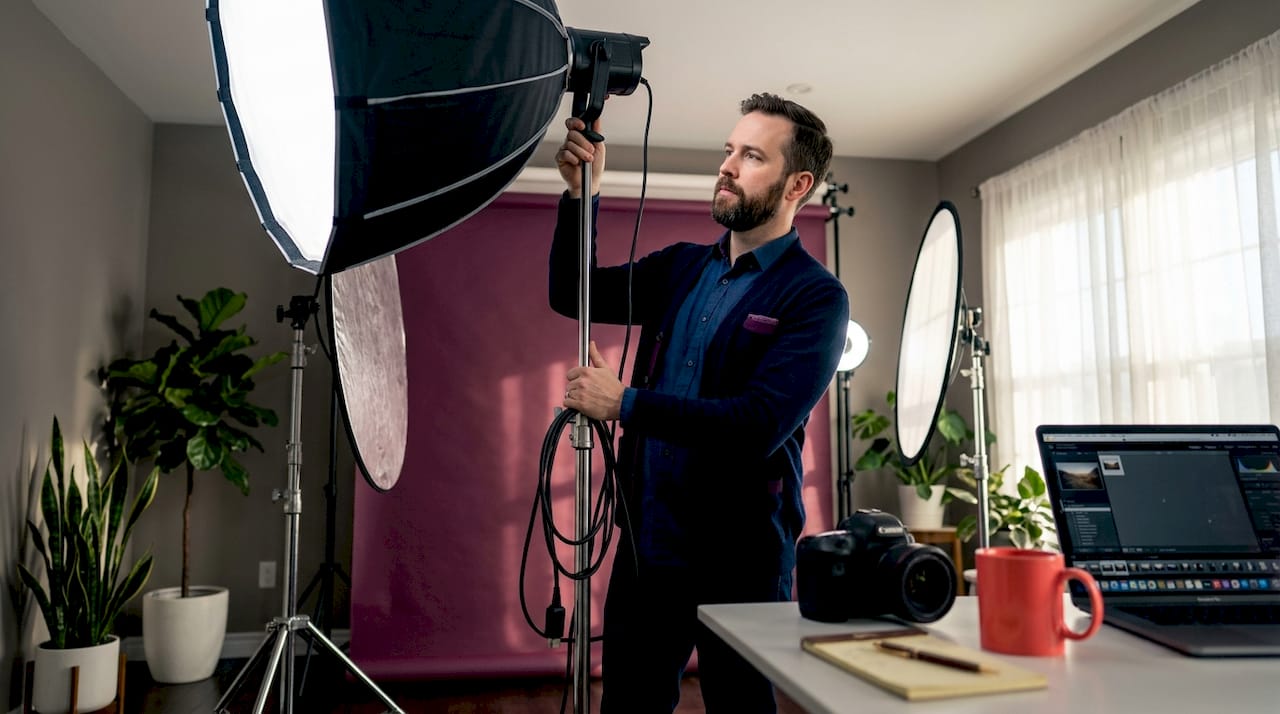
Lighting is the single most impactful variable in corporate photography, and getting it right starts with subtraction. Turn off overhead lights first, then build your setup from scratch. Office fluorescents mix colour temperatures with your flash or window light, creating unflattering green or orange casts that no amount of editing fully corrects.

The classic three-light setup works beautifully for headshots and team portraits: a key light, a fill light, and a background light. Position your key light 30 to 45 degrees off-axis and slightly above eye level, then feather it softly across the subject’s face for a smooth gradient rather than a hot spot. A reflector or V-flat on the opposite side provides gentle fill without flattening the image.
Light position | Purpose | Recommended angle |
Key light | Primary illumination | 30–45° off-axis, above eye level |
Fill light or reflector | Soften shadows | Opposite side of key, same height |
Background light | Separate subject from backdrop | Aimed at background, not subject |
For camera settings, use an 85–135mm lens at approximately f/4, a shutter speed between 1/160s and 1/200s, and ISO 100 to 400. This combination produces sharp, clean portraits with pleasing background compression. Lock your white balance to your key light source so the colour rendering stays consistent across every frame.
Pro Tip: Photograph your lighting setup from above and mark your subject’s foot position on the floor with tape. This reproducibility kit means you can reset the exact same light in minutes when photographing a team of 30 people across a full day.
2. Best posing techniques for flattering business headshots
Posing is where most subjects freeze up, and it is your job as the photographer to guide them out of that stiffness. Angle the body 20 to 30 degrees away from the camera while keeping the face directed toward the lens. This simple shift creates shape and dimension, making subjects look slimmer and more dynamic than a straight-on stance.
The jaw is the most underrated posing tool in corporate photography. Ask your subject to bring their chin slightly forward and down. This defines the jawline, reduces the appearance of a double chin, and projects quiet confidence. Pair this with tall posture and relaxed, dropped shoulders, and you have the foundation of a strong business portrait.
For three-quarter frames, hand placement matters. Hands tucked into pockets, resting on a surface, or lightly clasped in front all read as natural and composed. Avoid arms hanging straight at the sides, which tends to look stiff and adds visual width.
Expression coaching separates good headshots from great ones. Use these cues to get natural results:
Ask a casual question mid-shoot to catch a genuine reaction
Use short shooting bursts so subjects relax between frames
Try role-play prompts: “You just heard great news” or “You’re greeting a client you really like”
Show subjects a quick preview on the back of the camera to build confidence and course-correct posture
Pro Tip: For executives who want a more authoritative look, have them lean slightly forward from the hips toward the camera. It reads as engaged and commanding rather than stiff. For creative professionals, a slight head tilt and a softer expression shifts the energy entirely.
Adjust your approach for different business contexts. A tech founder may want something approachable and relaxed, while a Bay Street lawyer needs gravitas. Read the room, and let the subject’s industry inform the energy you are coaching toward.
3. Planning and workflow for efficient corporate photoshoots
The best shoot days are built in the weeks before the camera comes out. Effective brand photography starts with strategic planning that aligns imagery with business goals and brand character. Skipping this step means making expensive decisions on the fly.
Build a structured shot list that includes shot type, intended usage, aspect ratio, props, and wardrobe notes. A detailed shot list keeps the shoot moving and prevents the common mistake of finishing a session only to realise you missed the vertical crop needed for a website banner.
Here is a practical workflow for corporate shoot days:
Confirm wardrobe guidance with all subjects at least one week in advance
Scout the location and document ambient light conditions at the planned shoot time
Build and photograph your lighting setup before subjects arrive
Mark subject and tripod positions on the floor for repeatability
Shoot in order of lighting setup, not alphabetical order, to minimise transitions
Offer a 30-second preview to each subject after their first few frames
Capture selects, alternates, and safety shots for every subject
Shoot type | Time per subject | Key consideration |
Individual headshot | 10–15 minutes | Allow warm-up time for first subjects |
Team group portrait | 20–30 minutes | Organise by height and role |
Executive portrait | 20–30 minutes | Multiple setups and wardrobe changes |
Event coverage | Full event | Position for light, not just access |
Pre-production logistics like clear communication on wardrobe and timing are hidden levers that determine shoot day success. Communicate these details clearly, and your shoot day runs like a well-rehearsed performance.
4. Wardrobe and background choices that strengthen your brand
Background and wardrobe choices are not afterthoughts. They are brand decisions. Neutral, solid backgrounds in grey, white, or warm beige produce timeless portraits that work across LinkedIn, websites, and printed materials without dating quickly.
For wardrobe, the principles are straightforward:
Choose solid, mid-tone colours. Navy, charcoal, burgundy, and forest green all photograph beautifully.
Avoid busy patterns, logos, and thin stripes, which create visual noise and distract from the face.
Bring two wardrobe options to every session for variety and in-case-of-wrinkles backup.
Wear glasses daily? Bring a pair with anti-reflective coating, or plan to adjust the angle of the glasses slightly during the shoot to eliminate glare.
Skip pure black or pure white tops, as both create exposure challenges and can flatten the image.
Leave heavy jewellery and trendy statement pieces at home. Classic accessories age well; fashion-forward ones do not.
Environmental backgrounds, such as an office interior or branded workspace, work well for branding shoots where context matters. Neutral backdrops are the better choice for LinkedIn headshots and team photos where visual consistency across multiple subjects is the priority. Knowing which context you are shooting for before the session saves significant time on the day.
5. Post-production best practices and legal essentials
Editing is where good images become great ones, but restraint is the professional’s superpower. Retouching should remove temporary blemishes and distractions while preserving permanent features. Over-editing produces portraits that no longer look like the person, which erodes trust the moment a client meets them in real life.
For brand consistency across multiple shoot dates, develop brand-specific colour grading presets and document your export specifications. A three-tier image rating system (best, alternate, reject) applied during culling speeds up delivery and keeps your selects focused.
Shoot in RAW format to preserve maximum colour fidelity for both print and digital
Use calibrated colour checkers to maintain accurate skin tones across sessions
Apply consistent presets before making subject-specific adjustments
Deliver images in the formats and dimensions your client actually needs (web, print, social)
Pro Tip: Before delivering a full gallery, send three to five selects for client approval. This one step prevents the frustration of editing 80 images only to learn the client preferred a different expression or wardrobe option.
Signed model releases are non-negotiable for any commercial use of identifiable individuals. Model releases protect against legal risk and are required by stock agencies and commercial marketing clients. Collect them on shoot day, not after, when subjects are present and the paperwork is easy to complete.
Key takeaways
Strong business photography results from mastering lighting, posing, planning, and post-production as a connected system rather than treating each as a separate task.
Point | Details |
Lighting setup | Turn off overhead lights first, then build a three-light setup with documented positions for repeatability. |
Posing fundamentals | Angle the body 20–30°, chin forward and down, and coach expressions with casual prompts for natural results. |
Pre-shoot planning | Build a detailed shot list with usage, aspect ratios, and wardrobe notes at least one week before the session. |
Wardrobe and backgrounds | Choose solid mid-tone clothing and neutral backgrounds that align with brand and work across all platforms. |
Post-production and legal | Use brand presets for consistency, retouch with restraint, and collect signed model releases on shoot day. |
What I have learned after years of corporate shoots
The most common mistake I see business owners make is treating photography as a one-day event rather than a planned outcome. They book a session, show up in whatever they wore to the office, and expect magic. Sometimes it works. More often, we spend the first 20 minutes undoing choices that a five-minute wardrobe conversation the week before would have prevented.
The second thing I have learned is that most people are not bad at being photographed. They are just uncomfortable with silence and uncertainty. When I give clear, specific direction, “chin forward, shoulders back, now think about something that genuinely made you laugh last week,” the transformation is immediate. The anxiety drops, the expression opens up, and the image becomes something they are actually proud to use.
Lighting repeatability changed my team shoot days completely. Once I started photographing my setups and taping subject positions on the floor, I could move through 20 people in a morning without losing consistency. That kind of system is not glamorous, but it is the difference between a good photographer and a reliable one. Clients notice.
If you are a business owner trying to improve your own photography skills, start with your corporate photoshoot planning process before you touch a camera setting. The technical side is learnable in an afternoon. The planning habits take longer to build, but they pay off every single time.
— Jeff
Ready to put these tips to work with a pro?
If you have read this far, you already know that great business photography is about preparation, consistency, and knowing what you are going for before you press the shutter. Sometimes the fastest path to images you are proud of is working with someone who has the system already built.
[
At Itsjeffb, we work with Calgary business owners, professionals, and teams to create clean, natural headshots and branding imagery that actually gets used. Whether you need a solo headshot for LinkedIn, a full team headshot session at your office, or a complete branding shoot, we make the process straightforward and the results consistent. Check out our photography pricing and packages to find the right fit for your goals.
FAQ
What is the best lighting setup for business headshots?
A three-light setup with a soft key light 30 to 45 degrees off-axis, a reflector for fill, and a background light produces the most flattering and consistent results. Always turn off overhead office lighting first to avoid mixed colour casts.
How should I pose for a professional business headshot?
Angle your body 20 to 30 degrees away from the camera, bring your chin slightly forward and down, and keep your shoulders relaxed. This combination creates a confident, approachable look that reads well on LinkedIn and company websites.
What should I wear for a corporate headshot session?
Choose solid, mid-tone colours like navy, charcoal, or burgundy, and avoid patterns, logos, and pure black or white. Bring two wardrobe options to every session for variety and as a backup.
Do I need a model release for business photos?
Yes, signed model releases are required for any commercial use of identifiable individuals, including marketing materials, websites, and advertising. Collect releases on shoot day while subjects are present.
How do photographers keep headshots consistent across a large team?
Documenting light positions, distances, and camera settings, then photographing the setup and marking subject positions on the floor, allows photographers to reproduce consistent results across an entire team shoot day.
Recommended

Comments